Provenance
Origin, device, context, software version and transformations remain reconstructable.
Trusted Data
Trusted Data is not a label for every stream. It is a property engineered through identity, provenance, integrity and auditability, proportionate to risk and the required evidential value.
From measurement to evidence
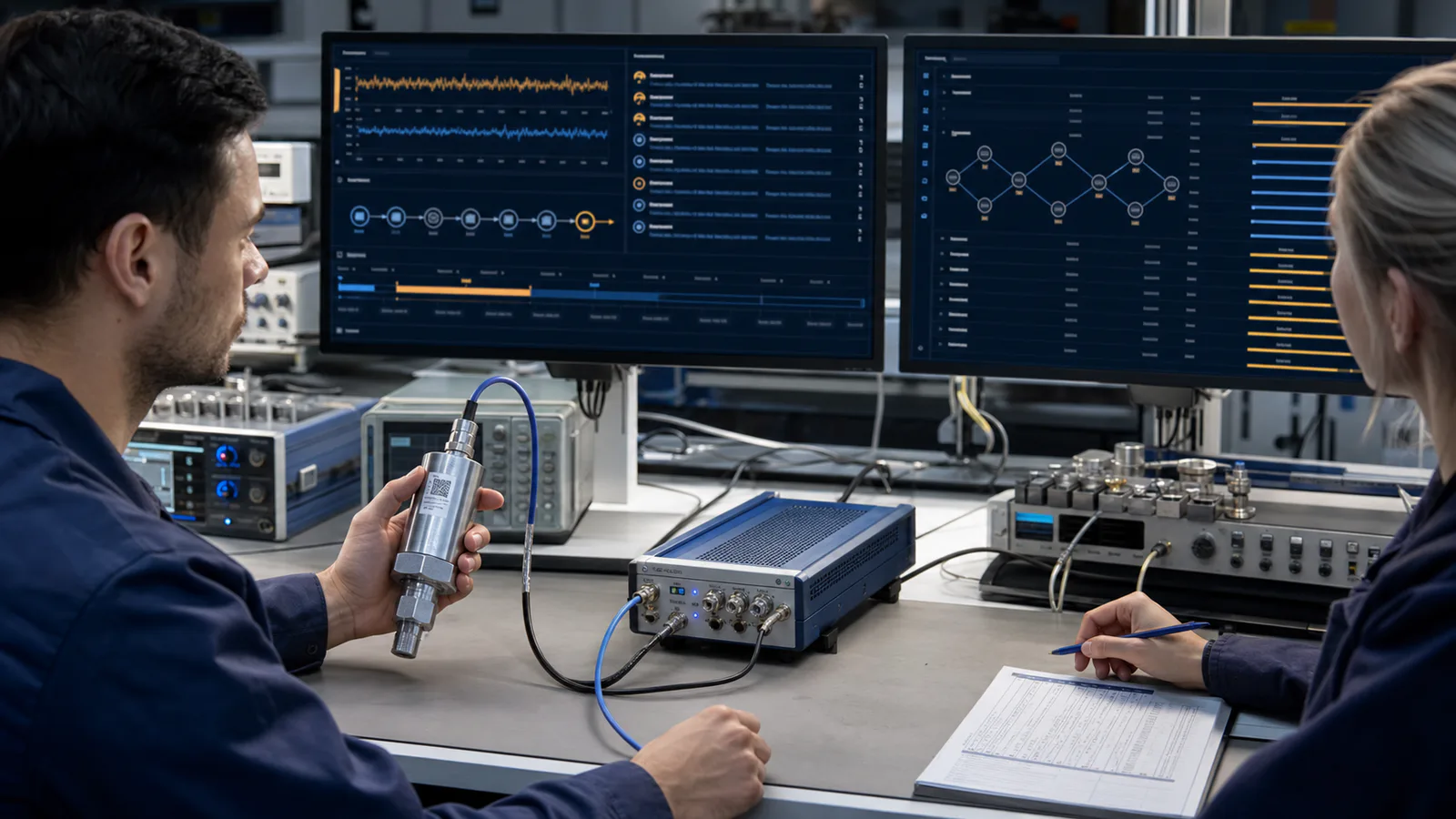
Device identity, timestamps, integrity and transformations are verified alongside the signal quality that originates the record.
TRUST CHAIN
A record is verifiable only when the measurement, device identity, transformations and access remain connected by coherent evidence.
FOUNDATIONS / 01—04
Origin, device, context, software version and transformations remain reconstructable.
Devices and services are authenticated; producers, transformers and readers are distinguishable.
Signatures, hashes, protected transport and controls prevent or expose tampering.
Events, access and transformations create evidence aligned with retention policy.
FIT / NOT FASHION
The required rigour depends on the consequences of contested data, not on the most fashionable technology.
TRUST DELIVERABLES
The solution may use signatures, hashes, append-only logs or notarisation: the choice follows the trust model and the required evidential value.
Provisioning, credentials, roles, revocation and device-to-asset association.
Canonicalisation, signatures or hashes, plus transport and storage protection.
Reconstructable software versions, rules, processing steps and ownership.
APIs, receipts, reports and procedures for checking a record without exposing secrets.
BOUNDARY
A blockchain or immutable ledger cannot make an incorrect source measurement true. Measurement quality, device identity, firmware security and transformation governance come first. Notarisation technology is a later decision, not the starting point.
VERIFY
Check a record through its identifier and view its inclusion status, date, hash and associated signature.
ExploreProjects
The Projects section shows contexts where identity, timestamps, transformations and accountability may become part of the architecture.
Explore projects and applicationsData that must become verifiable?
We define who produces the data, how it is transformed, what evidence is required and how it can be verified over time.