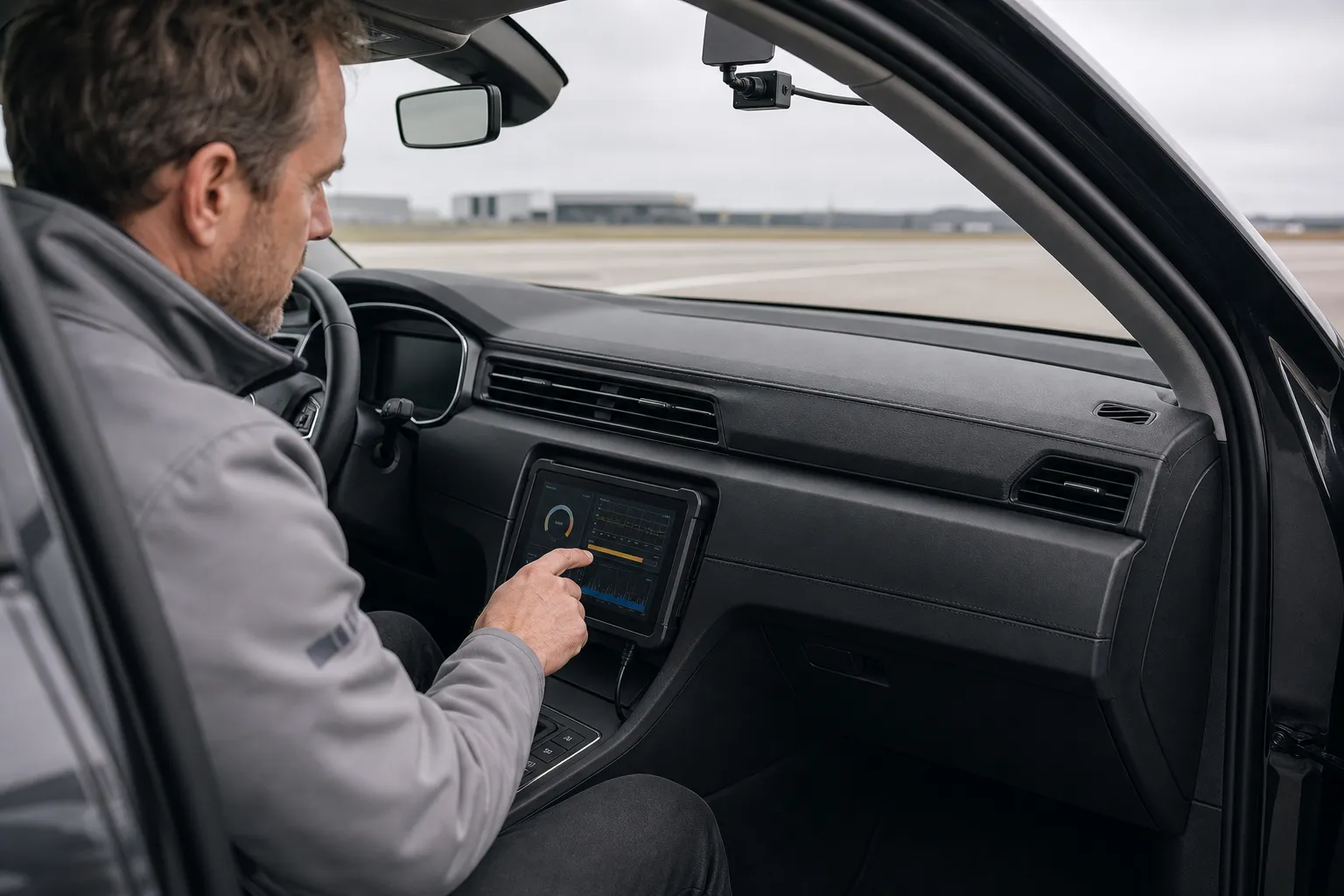
An onboard system guides the test driver through a mission and displays GNSS, CAN and results on a dedicated interface.
CONTEXT
Context and objective
During a test, the driver must follow a defined sequence, keep speed and distance within tolerance and read only the essential signals without distraction.
SYSTEM
Architecture
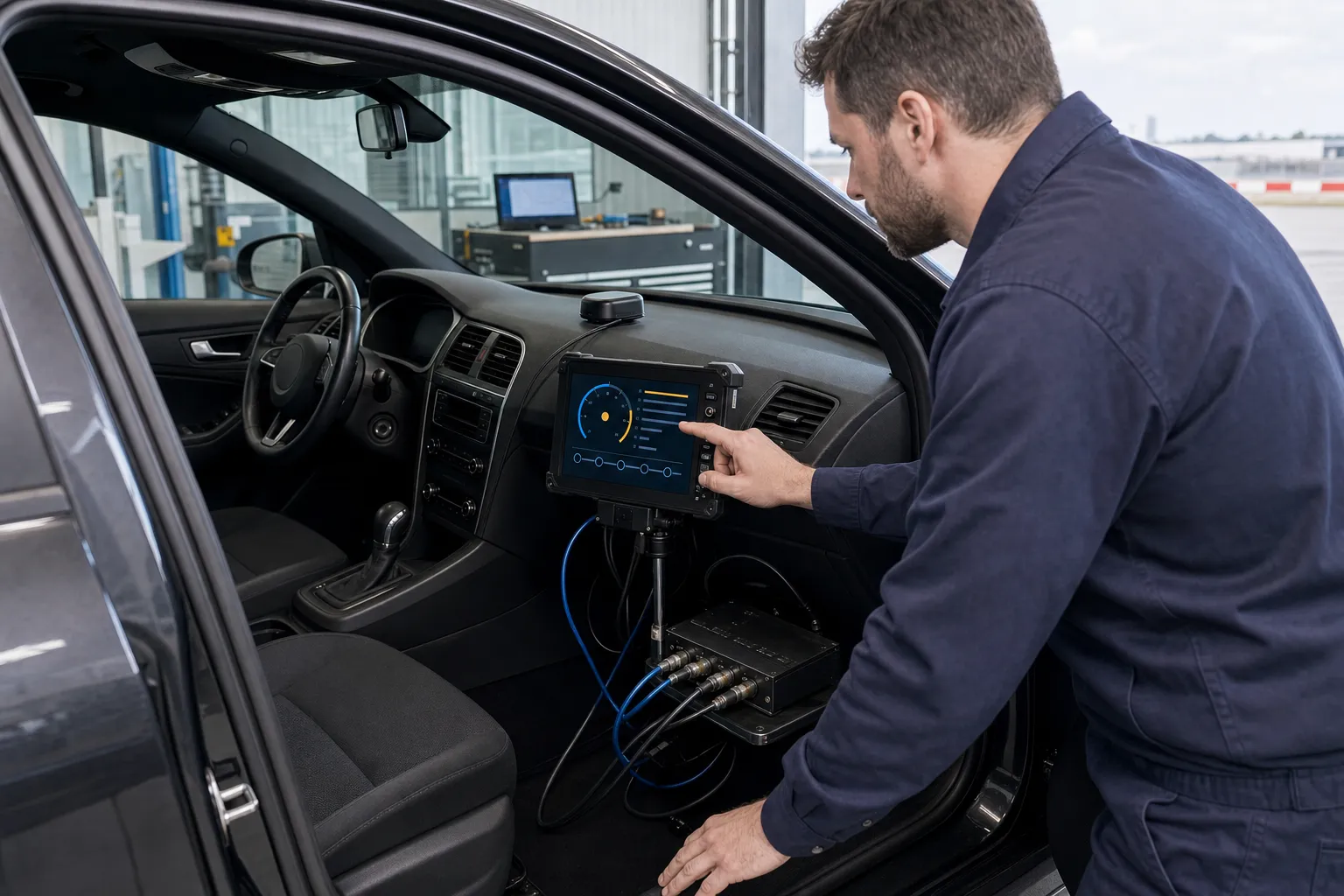
A configuration file describes the mission read by the onboard application. GPS and CAN channels feed test state, instructions, timer, progress chart and deceleration results directly on the device.
Devices and sensors
- Rugged embedded display
- GNSS receiver
- CAN interface
- Local storage for configurations and results
Connectivity and protocols
- GNSS
- CAN and configured signals
- Local mission file
- VBO logs and exportable results
Dashboards and operations
- Contextual driver instructions
- Real-time speed and tolerance
- Timer, run and distance
- Deceleration results and numerical screens
HDA contribution
- Test-mission analysis
- Interface design
- Embedded application development
- Field testing and documentation
EVIDENCE
Outcomes and evidence
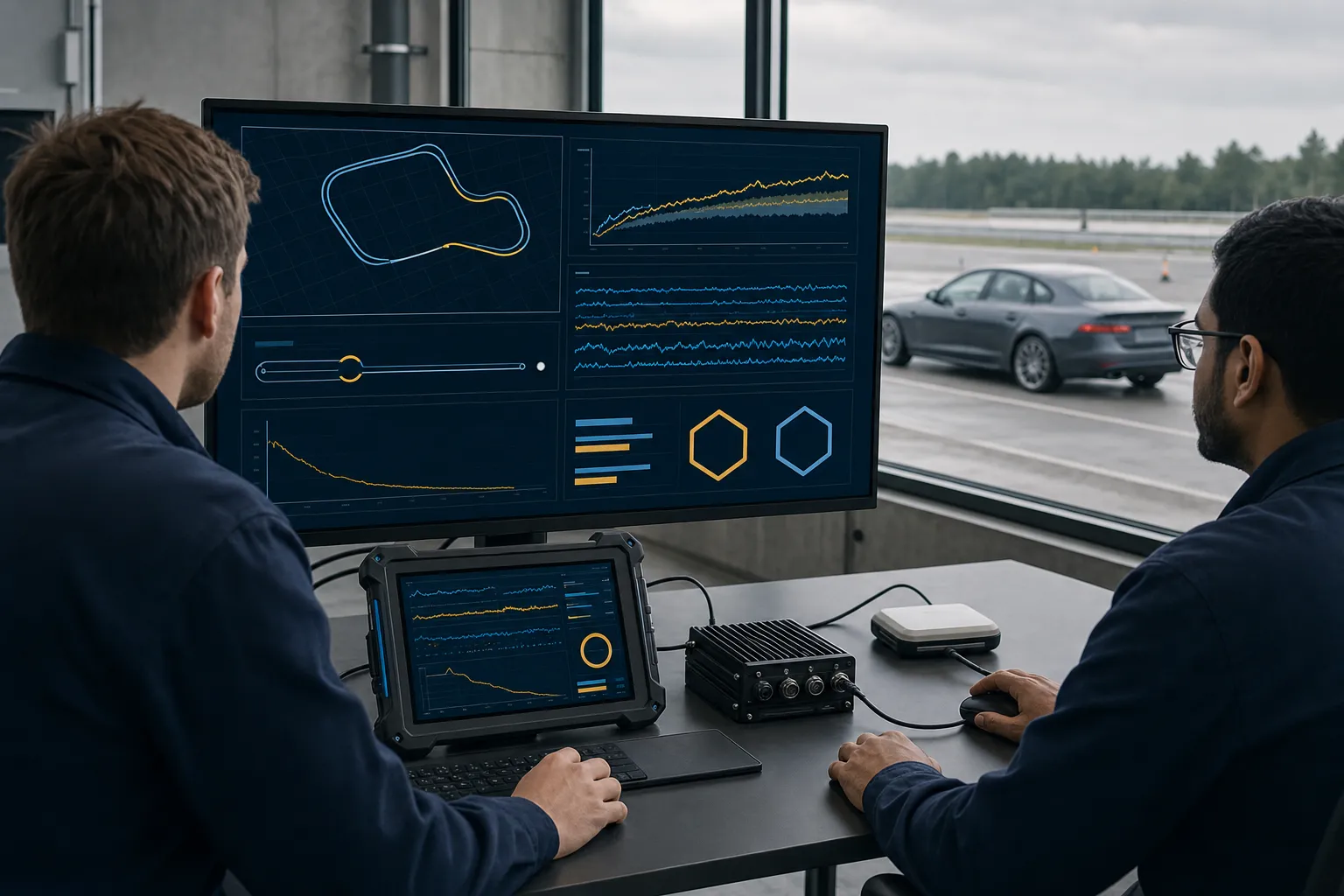
Device screens, configurations, logs and application files are available. The images document the interface; no approval outcome or vehicle-specific test result is published.
TRUST
Role of Trusted Data
Traceability across configuration, run and result files helps reconstruct a test. It does not replace procedure, instrument calibration or accountability in the testing process.