
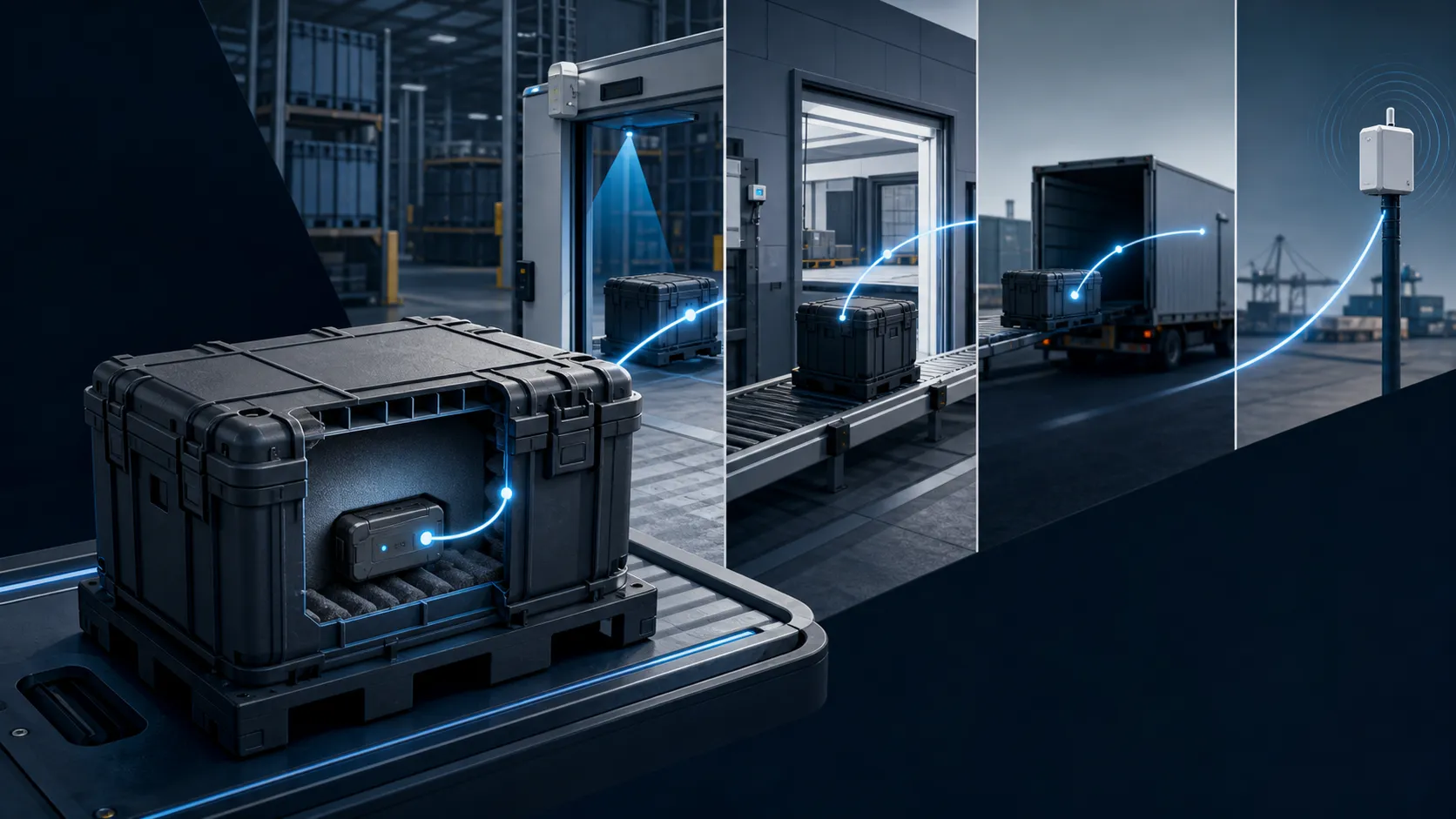
Location, state transitions, geofences and transport events connected into a continuous operational history.
 Containers, cargo and transport events
CONTEXT
Context and objective
Containers and cargo move through ports, yards, roads and rail networks with intermittent coverage and distributed accountability. Location, stops, openings and handovers must remain ordered even when a device reconnects after an outage.
SYSTEM
Architecture
A rugged GNSS and cellular tracker captures location and events, stores samples locally and sends them to the platform when connectivity is available. Geofences, rules and APIs feed a journey history, alerts and integrations with logistics systems.
Devices and sensors
- Low-power GNSS/cellular tracker
- Optional opening, shock or motion sensor
- Battery sized for the journey duration
- BLE tags and gateways where greater granularity is required
Connectivity and protocols
- GNSS
- LTE-M, NB-IoT or available cellular network
- MQTT or HTTPS over TLS
- Store-and-forward and integration APIs
Dashboards and operations
- Route history and last known state
- Entry to and exit from ports or logistics areas
- Opening, shock and tamper events
- Battery, network and data-continuity diagnostics
HDA contribution
- Hardware and installation profile definition
- End-to-end architecture and event model
- Rules, geofences and alert flows
- Dashboards and logistics-process integration
EVIDENCE
Outcomes and evidence
The pattern supports a solution aligned with route, transmission rate, autonomy and environmental conditions while keeping offline periods understandable.
TRUST
Role of Trusted Data
It becomes relevant when multiple organisations must verify handovers or dispute an event. Device identity, timestamps and transformations must then remain connected.